MAKEONBUILDER-LEARNING ECOSYSTEMTHINK. MAKE. BUILD THE FUTURE.

Builder-learning ecosystem

MAKEON

Think. Make. Build the future.

Makeon helps children understand math and science through hands-on building, real-world projects and a structured pathway from curiosity to demonstrated capability.

Seven moves.
Every session.
A builder for life.

Every Makeon session compresses the life of a real engineering project into one repeatable rhythm: enter, find the problem, plan it, build it, fix it, show it and record it.

Method is not left to chance. Method is what we teach.
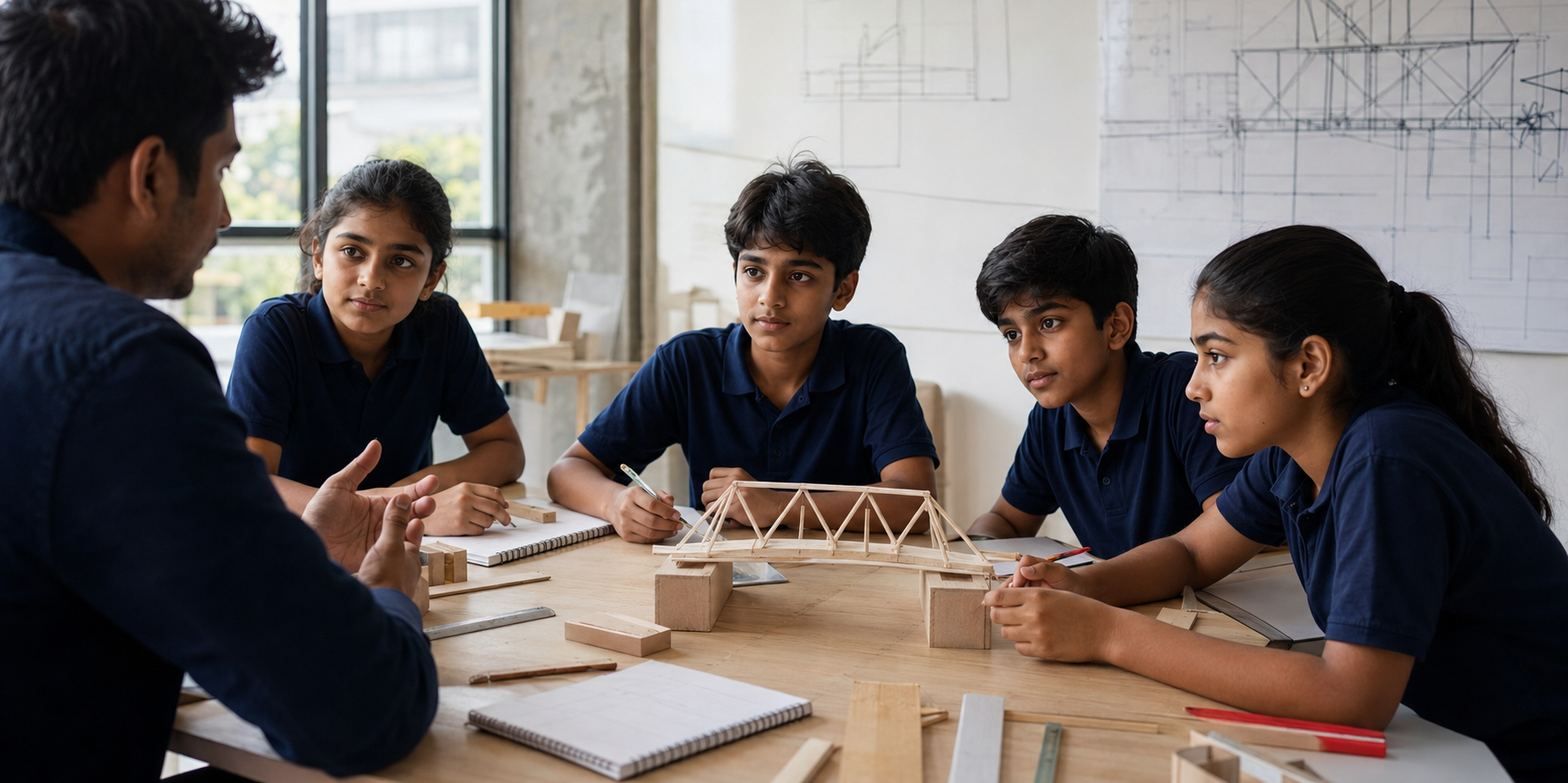
Students working together at a Makeon studio bench
There is no front of the room. The mentor holds the rhythm; the learner does the engineering.
01

Meet the problem

Discover

The learner

Encounters a real problem before seeing a solution. Curiosity comes first; components come second.

The mentor

Asks rather than announces, connecting the challenge to the science and mathematics the learner is studying.
Nothing demonstrated.Everything built.

Capability grows when knowledge is used.

In many classrooms, mathematics and science remain abstract for too long. Students may remember definitions, formulae and diagrams, yet struggle to see how those ideas behave in the physical world. Makeon closes that gap by placing concepts inside purposeful building experiences.

The goal is not activity for its own sake. Every Makeon session is designed around a clear concept, a buildable challenge, a visible constraint, a testable outcome and a learner explanation. The hands work, but the thinking is always the centre.

This is why the Makeon experience feels different from a hobby class. It is structured, cumulative and evidence-led. Learners do not simply complete a project; they learn to notice, plan, test, improve and explain.

Build

Build with AI and emerging technologies.

The philosophy of Makeon is “Build” with AI and emerging technologies. Technology in STEM becomes meaningful when learners use it to think, make, test, improve and explain what they have created.

Academic rigor

Concepts. Clarity. Confidence.

Learn by making

Hands-on. Iterative. Experiential.

Builder mindset

Curiosity. Problem solving. Resilience.

Future ready

Technology. Innovation. Real-world impact.

Trust & partnership

Safe spaces. Mentorship. Lifelong values.

A coherent progression, not a collection of kits.

Makeon is organised as a learning pathway. Each stage increases conceptual depth, independence, documentation quality and the learner’s ability to explain what they built.

01

Ages 5–7

Foundation Studio

A playful but disciplined introduction to patterns, structures, balance, measurement, materials and cause-and-effect thinking.

Best for

Children who are beginning to notice how the physical world works.

Core modules

  • Build-and-name vocabulary
  • Shape, balance and measurement
  • Observation journals
  • Explain-back circles

Evidence of learning

Learners create simple models and explain what changed when they adjusted material, shape, size or force.

02

Grades 6–8

Builder Programme

Curriculum-connected building challenges that make mathematics and science visible through real-world tasks.

Best for

Students who need to move from memorising concepts to using them with confidence.

Core modules

  • Mechanisms and motion
  • Structures and loads
  • Electricity and control
  • Measurement-led improvement

Evidence of learning

Learners submit a build record showing concept, design choice, test result, failure point and improvement.

03

Grades 9–12

Applied Engineering Studio

Longer design briefs where students practise systems thinking, documentation, iteration and technical communication.

Best for

Older learners preparing for serious academic, technical and entrepreneurial pathways.

Core modules

  • Design briefs
  • Prototype cycles
  • Systems and constraints
  • Portfolio presentation

Evidence of learning

Learners present a documented prototype and defend the decisions behind it using evidence.

04

Schools & learning centres

Institution Studio

A structured implementation model for centres that want Makeon as a repeatable learning pathway, not an occasional workshop.

Best for

School leaders, centre owners, facilitators and programme coordinators.

Core modules

  • Facilitator orientation
  • Programme calendar
  • Material planning
  • Parent communication

Evidence of learning

Institutions receive a clear adoption roadmap and learner-evidence structure before launch.

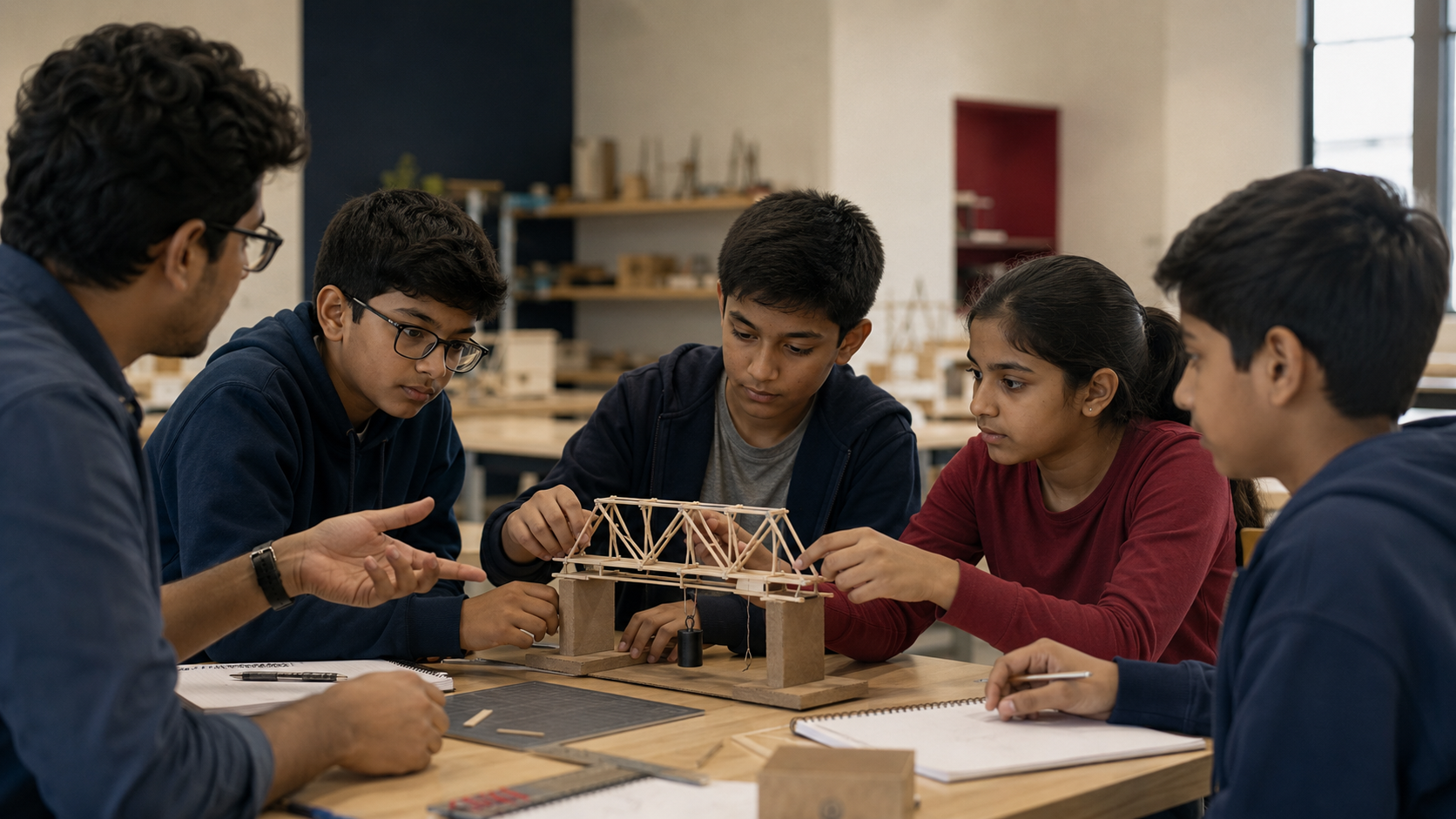
Students and a facilitator testing a handmade bridge prototype in a Makeon-style studio
A focused build table: learners test, measure, document and improve a real prototype.

A serious place for children to become capable.

The Makeon environment should feel calm, focused and aspirational. It is not a noisy toy room or a decorative STEM corner. It is a studio where learners handle materials, ask precise questions and take pride in making something work.

  • Project tables for collaborative building
  • Material and tool zones organised by module
  • Display surfaces for sketches, vocabulary and evidence
  • Portfolio rituals that make progress visible to learners and parents

Adopt a learning system, not a one-day activity.

For schools

Makeon can support science, mathematics and innovation goals through structured studio sessions, club formats, portfolio projects or enrichment blocks.

For learning centres

Makeon gives centres a premium academic programme with repeatable modules, clear parent communication and visible learner outcomes.

For families

Makeon gives children a meaningful alternative to passive screen time by helping them build, test, explain and grow confidence.

01

Readiness conversation

We understand the age group, weekly schedule, space, facilitator capacity and institutional goals.

02

Programme fit

We recommend the starting level, module sequence and minimum material setup.

03

Facilitator preparation

Facilitators receive the session structure, questioning model and evidence expectations.

04

Learner launch

The first cohort begins with a clear pathway, parent-facing language and visible progress records.

05

Review and deepen

The institution reviews learner evidence, facilitator feedback and next-stage readiness.

Progress should be visible without reducing learning to marks alone.

Makeon treats every build as a record of thinking. Learners document choices, tests and improvements so parents and institutions can see confidence becoming capability.

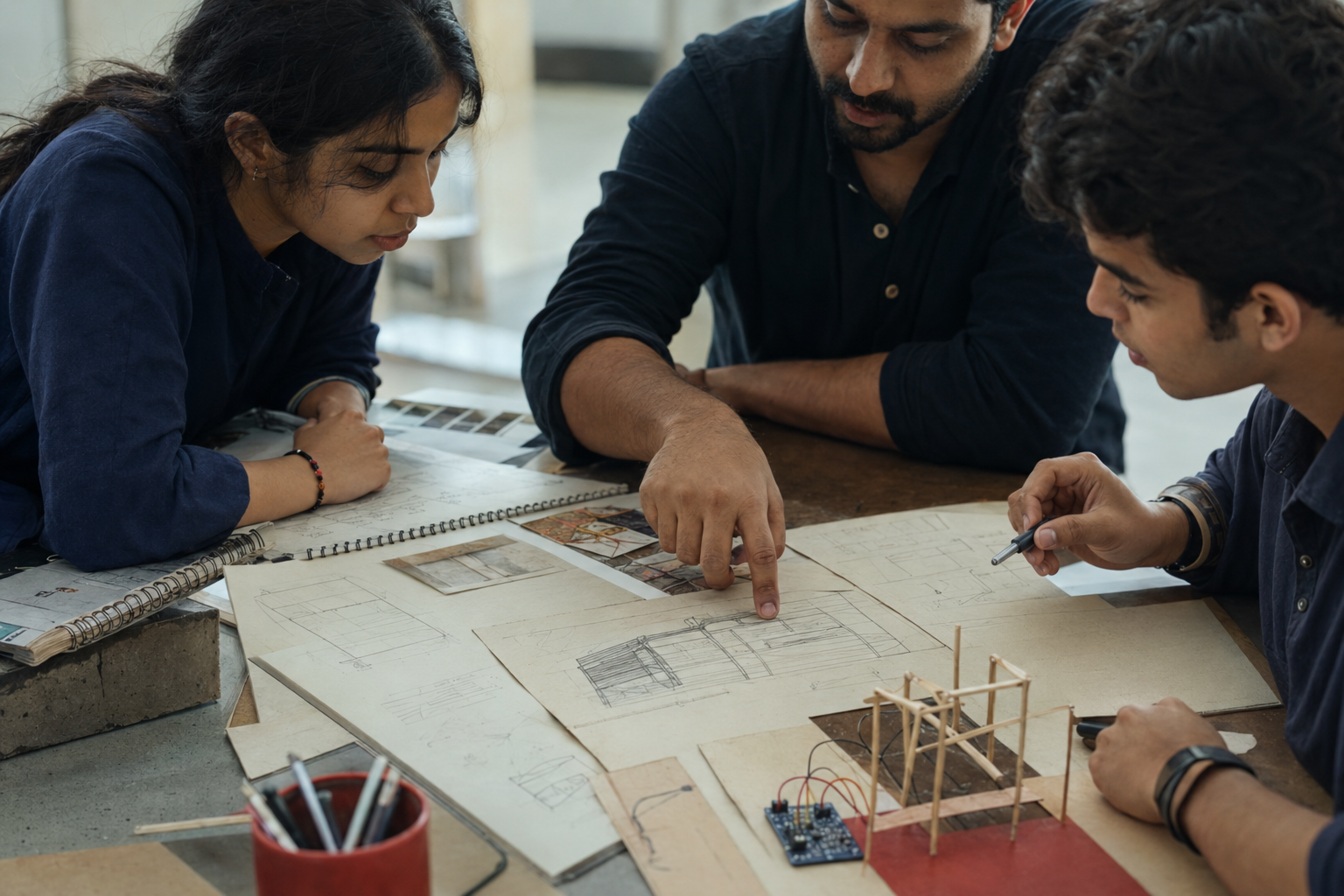
Students and a mentor reviewing sketches, measurements and prototype evidence
Documentation turns a build into evidence of understanding.
MAKEONBuilder Portfolio

Certificate of Completion

Makeon Builder ProgrammeConcept · Build · Explain
Test 02Bridge load improved by 38%

Changed truss angle, reduced flex, documented failure point.

How evidence is built

Build records

Learners record what they attempted, what they changed and what they discovered.

Concept maps

Key mathematics and science ideas are named and connected to the project.

Prototype evidence

Models, measurements, photos and test notes show whether the idea worked.

Explanation

Learners practise speaking and writing about decisions, constraints and next steps.

Powered by our ecosystem partners

innointelMaker Nest

The thinking behind the practice.

The library below is structured as a serious institutional resource centre. Final PDFs can be attached when the documents are approved.

Position paper

Why Builder Learning, Why Now

The case for helping children move from content familiarity to usable capability.

Request document
Programme guide

The Makeon Builder Pathway

The step-by-step learning architecture behind Makeon sessions and portfolios.

Request document
Institutional brief

Makeon for Schools and Centres

How Makeon can be adopted in schools, learning centres and enrichment contexts.

Request document
Facilitator note

Questions That Build Thinking

How mentors guide learners without turning making into passive instruction.

Request document
Parent note

What Progress Looks Like

A plain-language guide to understanding confidence, evidence and growth.

Request document
Assessment note

Portfolio Evidence in Builder Learning

How learner work can be documented without reducing it to marks alone.

Request document

Clear answers before adoption.

Is Makeon a robotics class?

No. Robotics can be one expression of builder learning, but Makeon is broader: structures, mechanisms, materials, measurement, circuits, systems and explanation.

Does it replace school science or maths?

No. Makeon strengthens academic learning by giving children concrete experiences that make concepts easier to understand, remember and explain.

Do learners need prior technical skill?

No. The pathway is staged. Younger learners begin with observation and simple builds; older learners move toward prototypes, systems and portfolios.

Can schools adopt it inside the timetable?

Yes, subject to local planning. Makeon can be shaped as a weekly studio, enrichment block, lab period, club or centre-based programme.

Choose the right conversation.

Makeon now separates parent enquiries from school and centre conversations, so each visitor sees a more relevant next step.